

The first part of a finding
A finding starts with four sections, in this order: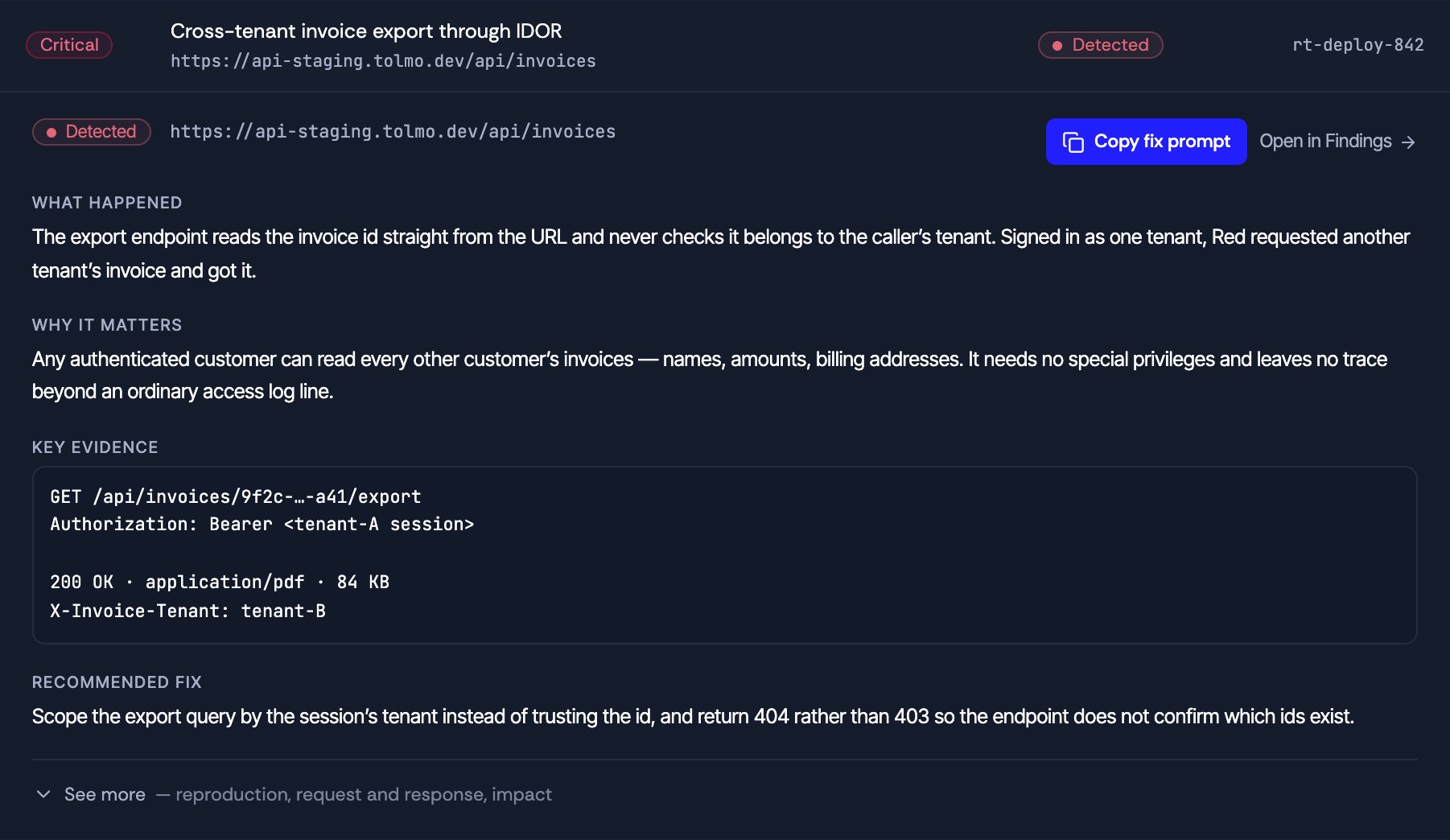
An open critical finding: the status and the target, then what happened, why it matters, the evidence, and the fix.
POST /api/auth/reset-password.
The full technical record
The other sections are for the engineer who reproduces the issue or reviews the fix.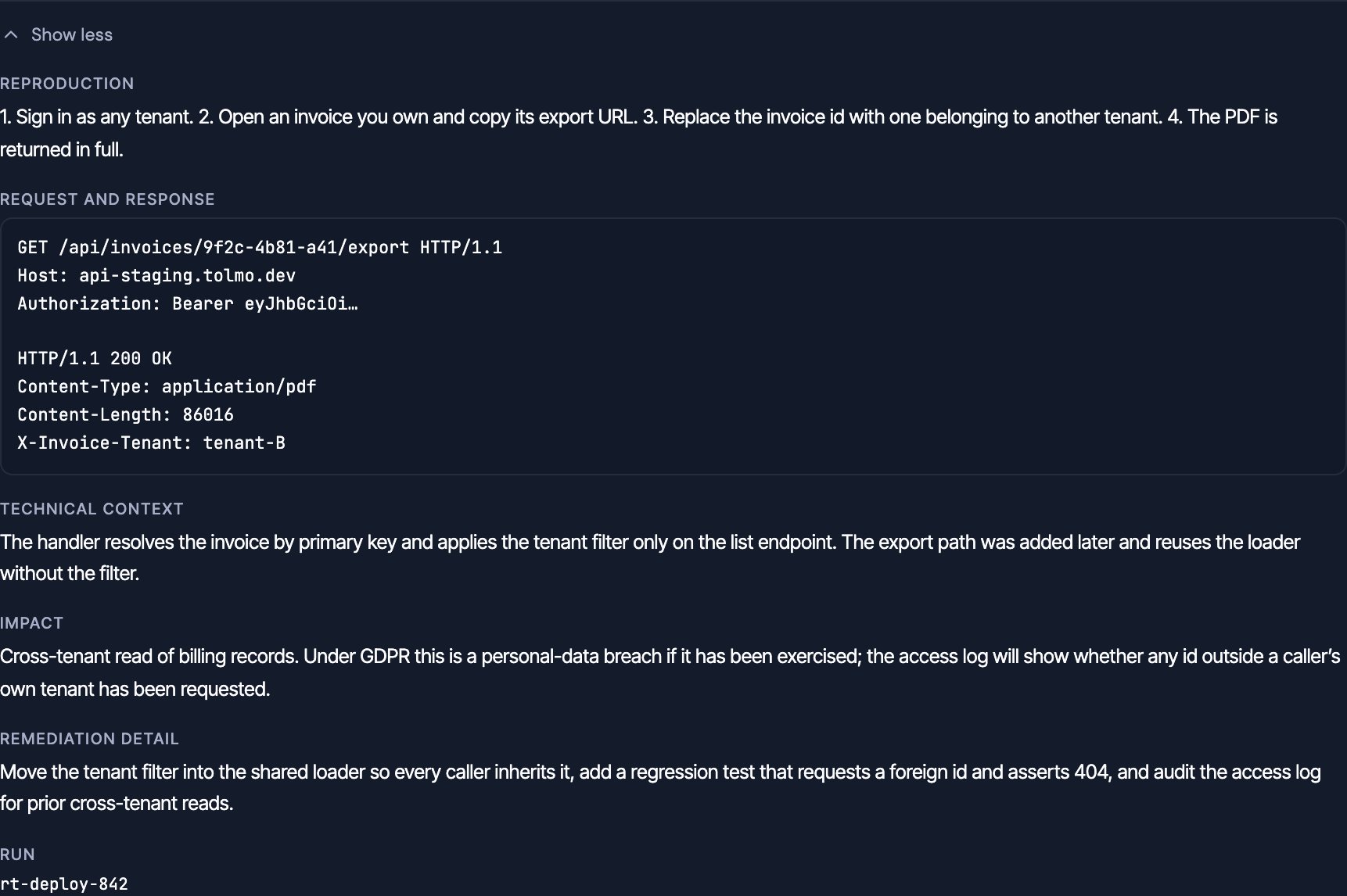
The technical record: reproduction, the full request and response, technical context, impact, and remediation.
Chained findings
Some low-severity issues share an asset. Together, these issues can make one attack with a higher severity. For example, an anonymous upload can lead to cache poisoning. Tolmo reports the chain as a separate finding. The chained finding links to each finding that it contains.Sources and duplicates
Sometimes the Red team agent and a scanner report the same issue. Tolmo then keeps one finding and shows the two sources. Sometimes two findings still show the same issue. Tolmo then marks one finding as Duplicate, and that finding links to the other finding.Severity
Each finding has one of these severities: Critical, High, Medium, Low, or Info. Lists of findings sort by severity. Findings from the Red team agent also have a CVSS v4.0 score. The agent calculates the score from the evidence that it recorded.Two statuses: triage and exploitability
Each finding has two statuses, and each status changes independently. The triage status shows what your team decided. The exploitability shows what Tolmo proved.Triage status
If you connect Linear and someone cancels a ticket in Linear, Tolmo shows the finding as Canceled.
To change the triage status, see Fix a finding.
Exploitability
The exploitability changes only when an agent tests the finding. Sometimes the test does not get a clear result. Then the finding shows one of these states:
Next steps
Fix a finding
Copy the fix prompt, link the pull request, or create a ticket.
Retest a fix
Prove that the exploit does not work now.